

To strengthen infrastructure, every engineer suggests using post-tensioning or pre-tensioning. These techniques reinforce the core strength of a building. However, the choice of which type of tensioning to use in infrastructure projects is becoming a growing debate, especially in high-level project planning. Therefore, understanding post-tensioning and pre-tensioning, how the processes take place, and where each method is applicable are common doubts that arise in the minds of building owners.
So, let’s clear the confusion and provide a clear explanation of both methods. Strut and Tie is renowned for its expertise in Post tensioning services Kerala. The company mainly focuses on constructing infrastructure such as commercial and residential buildings. Therefore, post-tensioning remains their primary service rather than pre-tensioning.
Now, let’s dive into the blog to understand this in details
Difference between post tensioning and pre tensioning
For your understanding, in the pre-tensioning method, we first stretch the tendons (steel cables) before pouring the concrete. Then, the concrete mix is poured around these stretched cables and allowed to set. After the concrete gains sufficient strength, the tension in the cables is released, and the force is transferred to the concrete. As a result, this method improves the structural strength of the element. This technique is mainly used in factories; for example, railway sleepers and precast beams are common applications produced in such controlled environments.
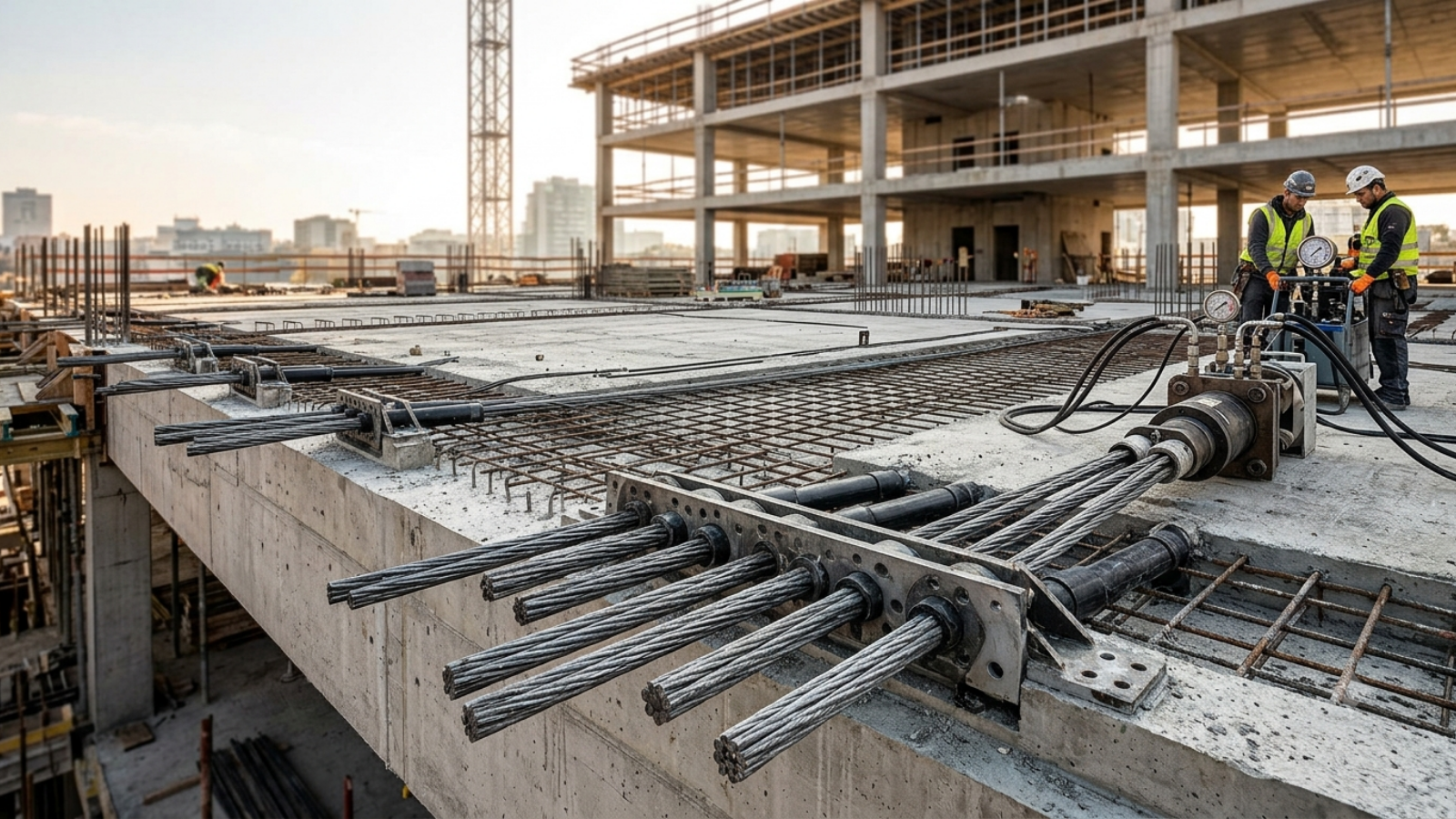
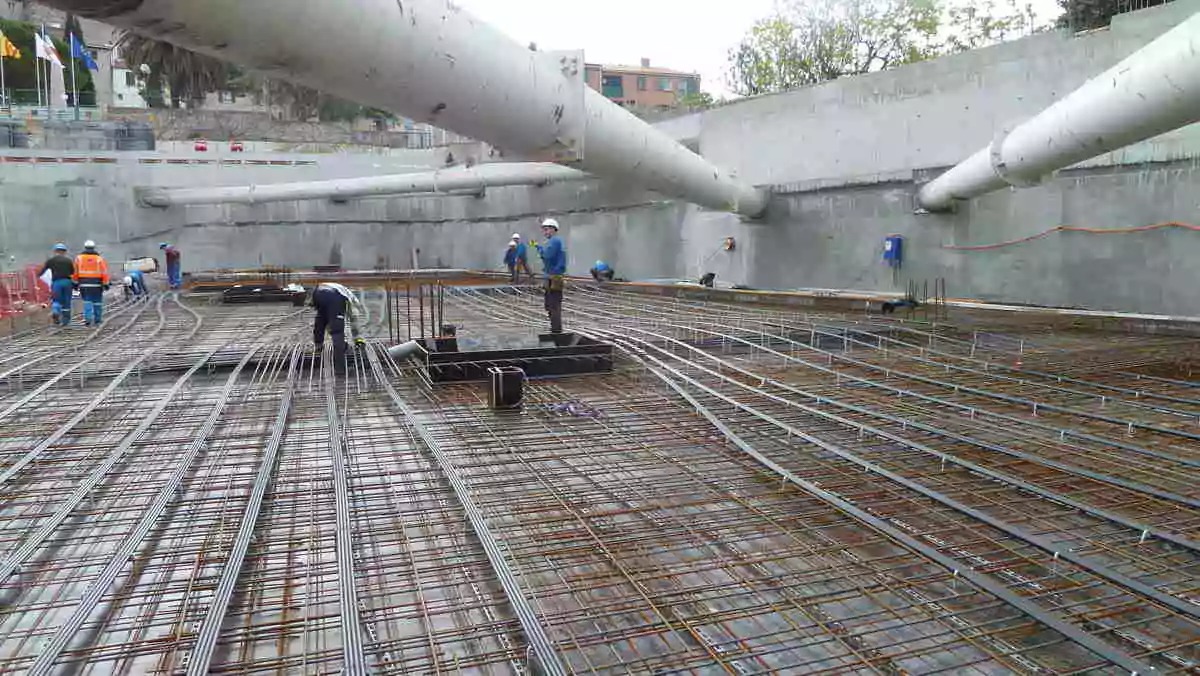
On the other hand, post-tensioning works in the opposite way. In this method, we first pour the concrete with ducts or sleeves placed inside. Then, after the concrete is allowed to gain enough strength, we apply tension to the tendons and anchor them properly. Therefore, the force is introduced after the concrete has hardened. This method is widely used in building construction, especially for slabs.
Moreover, buildings such as malls, hospitals, and schools require large open areas for parking and high foot traffic. Such structures need to withstand heavy loads efficiently. Hence, post-tensioning becomes the best option for achieving greater strength, durability, and flexibility in modern construction.
Strength and Durability: Pre-Tensioning vs Post-Tensioning
Pre-tensioning is mainly used to produce precast elements in factory-controlled environments. Since the process takes place under controlled conditions, it ensures high initial strength and consistent quality. Moreover, it provides uniform stress distribution across the concrete element. As a result, the chances of cracks and deformation are significantly reduced. In addition, it offers long-term durability
On the other hand, post-tensioning is widely used in large-scale structures such as parking areas, sports arenas, malls, and schools, where high load-bearing capacity is essential. In this method, post-tensioning provides greater strength and allows longer spans with fewer columns, thereby reducing structural stress points. Furthermore, it enhances durability under real-world site conditions and performs well under heavy loads.
Load-Bearing Capacity: Which Method Performs Better?
- Pre-Tensioning – Load Performance
Pre-tensioning is widely used in controlled factory environments. This method provides strong and stable load-bearing capacity in precast elements. One of the key features of pre-tensioning is its uniform stress distribution and consistent quality. As a result, it performs efficiently under moderate and repetitive loads that are predictable. Therefore, components like precast beams and railway sleepers are common examples of this method.
- Post-Tensioning – Load Performance
On the other hand, post-tensioning delivers higher load-bearing capacity for large and complex structures. By applying tension after the concrete gains strength, it actively compresses the concrete, which improves its ability to handle heavy loads. Moreover, it allows longer spans with fewer columns, thereby reducing weak points in the structure. Hence, it is widely used in buildings, parking structures, malls, and bridges, where high load performance is critical. For post-tensioning services in Kerala, the strut and tie method ensures optimal strength and durability.”
Final thought
The main doubts surrounding this topic have made it a center of attention among engineers and builders. Understanding pre-tensioning and post-tensioning is important to know how these methods function, especially for a company like Strut and Tie, which focuses on constructing commercial and residential buildings. Between the two methods, post-tensioning is generally preferred for modern construction projects.
In this blog, we have discussed the major differences between post-tensioning and pre-tensioning, their applications, and key features such as load-bearing capacity, longevity, durability, and overall strength. We hope this explanation has provided clear insights into the topic.
If you still have questions or dream of building a durable, future-ready structure, we encourage you to reach out to Strut and Tie Post tensioning services Kerala . We offer the best post-tensioning services to help you create a safe and strong building for years to come.