

Post-tensioning applications vary according to the structural design and requirements of a building. It helps improve structural strength and supports the safe performance of concrete structures. Therefore, engineers can use post-tensioning in both residential and commercial buildings.
Moreover, post-tensioning serves as an effective structural strategy for creating longer spans with fewer columns. This approach can provide greater flexibility in space planning while potentially reducing structural material requirements and overall construction costs, depending on the project design.
Strut and Tie is a leading post-tensioning company in Trivandrum and Kerala. We provide professional post-tensioning services for both residential and commercial buildings, with solutions tailored to the structural requirements of each project.
What is post-tensioning?
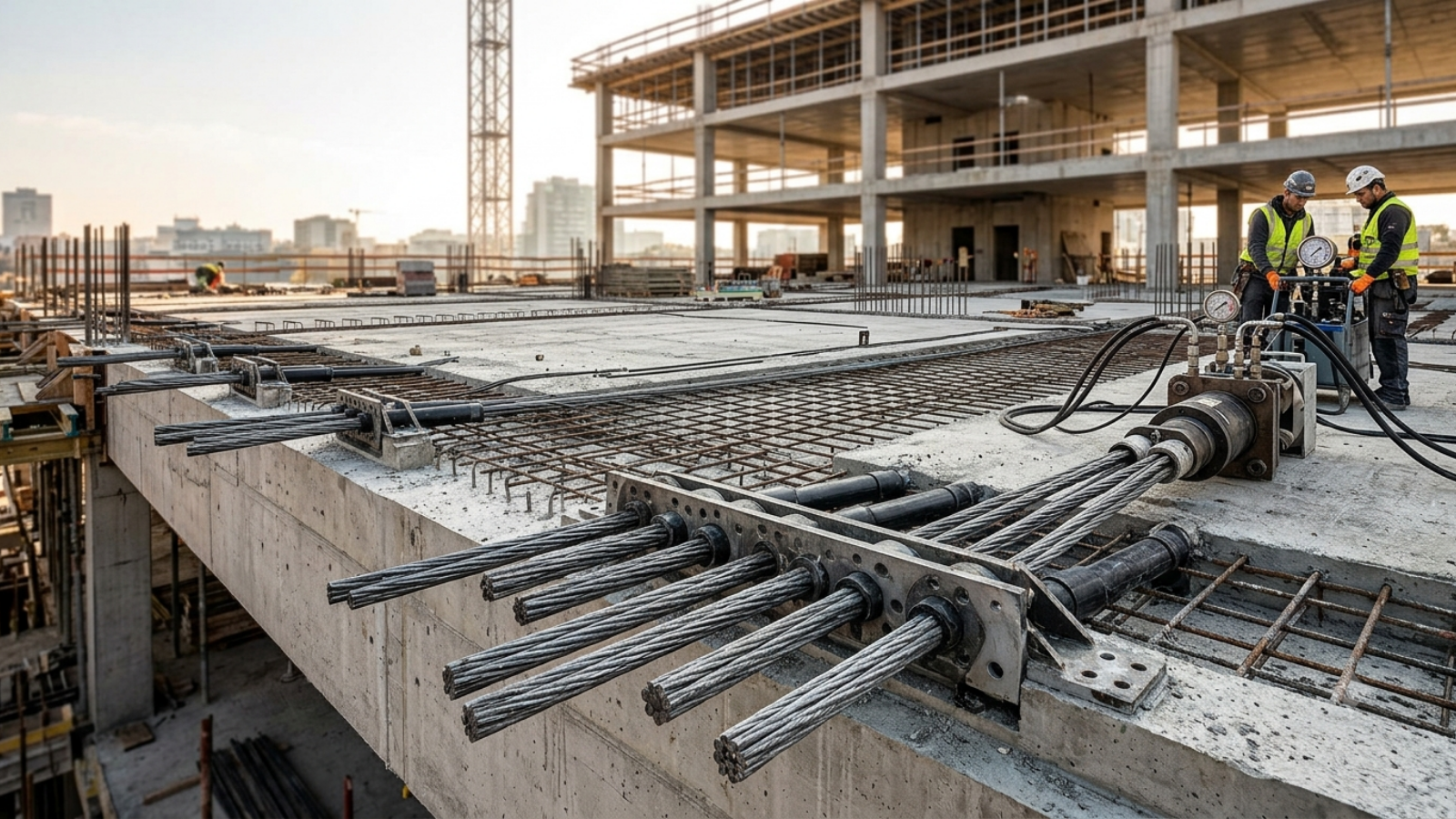
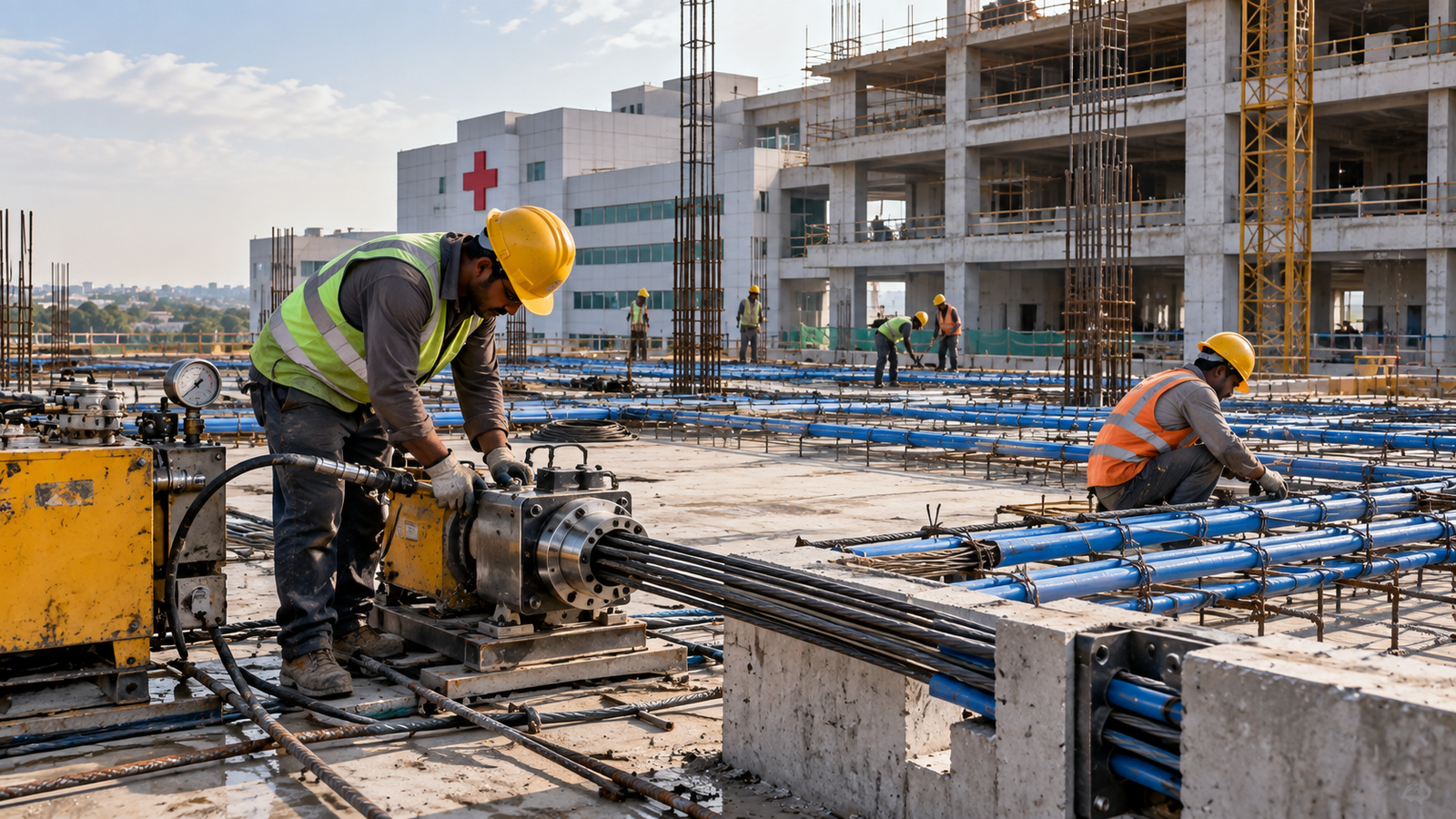
Post-tensioning strengthens concrete by using high-strength steel strands. Engineers tension these strands after the concrete gains sufficient strength. As a result, the concrete can handle structural loads more effectively.
Where Is Post-Tensioning Used?
Engineers use post-tensioning in different types of structures based on their design and requirements.
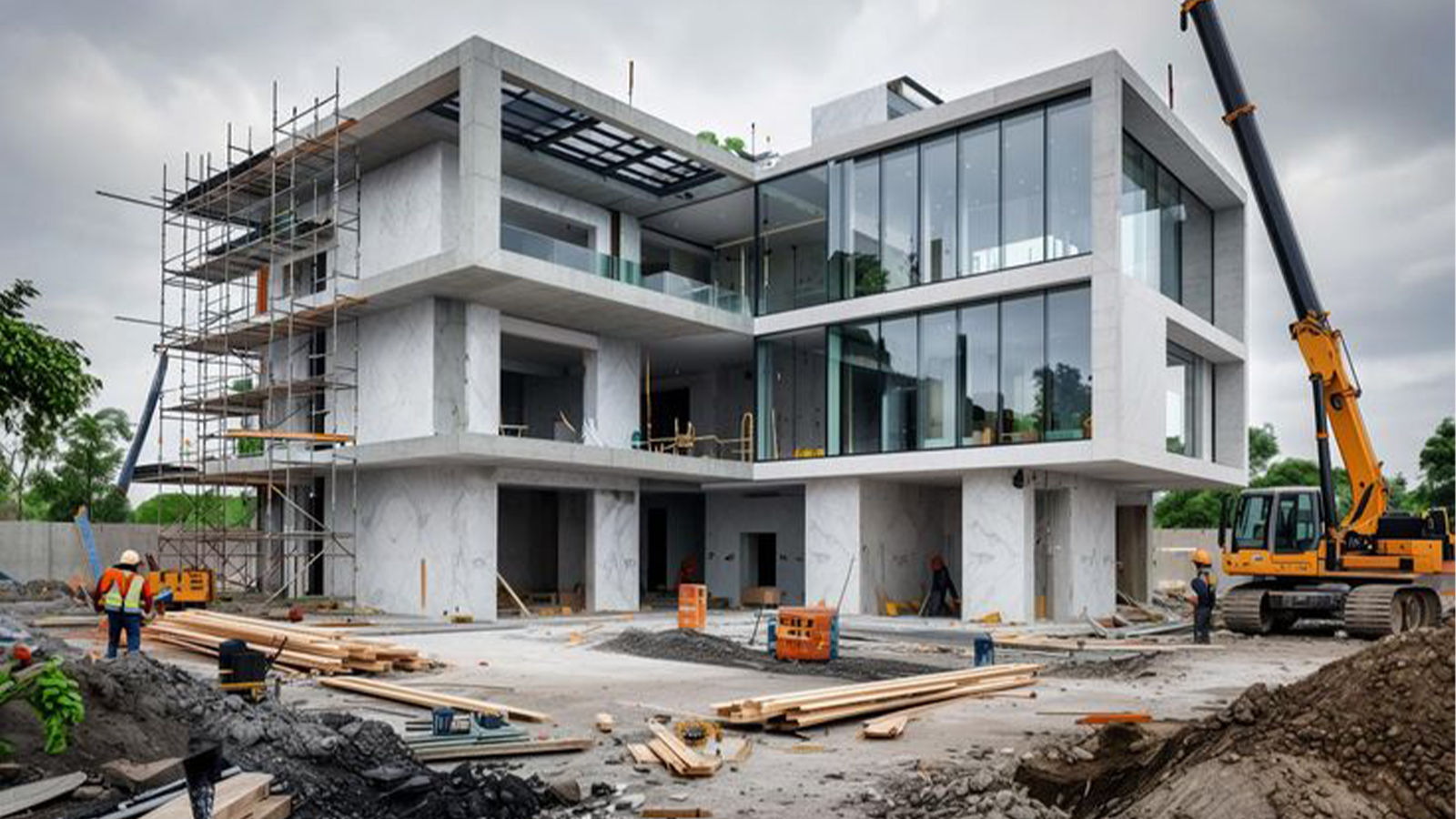
- Residential Buildings: It helps create longer slab spans and provides more flexibility in floor planning.
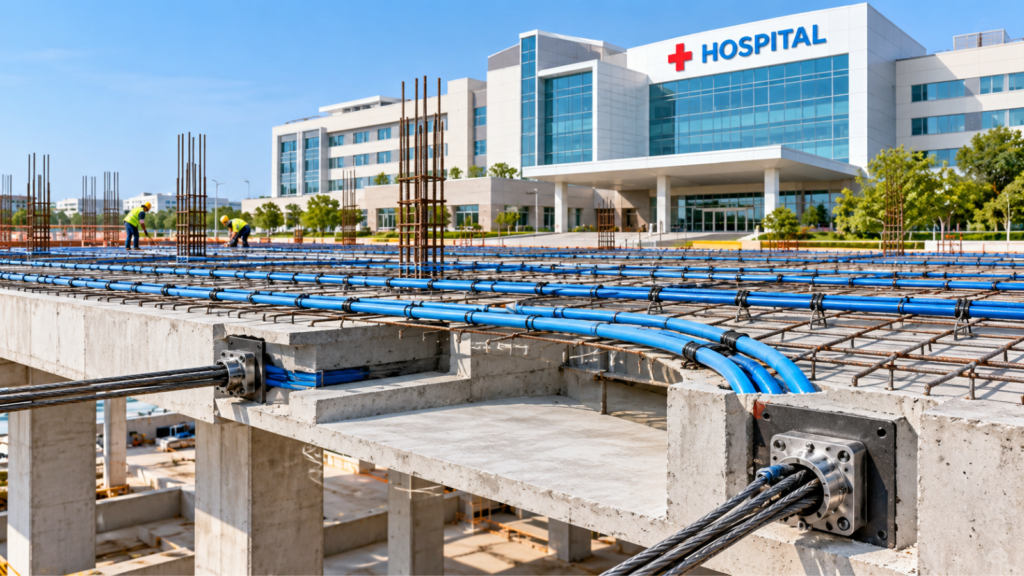
- Commercial Buildings: It supports open floor areas by reducing the need for intermediate columns.
- Shopping Malls: Large retail spaces and parking areas can benefit from longer spans and fewer columns.
- Parking Structures: Post-tensioning helps create efficient parking layouts and provides more space for vehicle movement.
Why Use Post-Tensioning?
Post-tensioning offers several benefits for modern construction. First, it allows engineers to create longer spans. In turn, this can reduce the number of columns needed.
It also helps improve space utilization and gives architects greater flexibility during planning. Additionally, proper post-tensioning design can help control cracking and deflection.
Conclusion
Overall, post-tensioning applications help create strong, efficient structures with longer spans and fewer columns. At Strut and Tie, we provide post-tensioning solutions for residential and commercial projects based on their structural requirements. Planning a post-tensioned structure? Contact Strut and Tie to discuss your project requirements with our team.